
When your shoulder suddenly gives out, so you think what are the shoulder dislocation symptoms, right? and it feels like the rug has been pulled from under your arm. That abrupt shift—pain, a weird twist, or the sense that the joint is no longer where it should be—can be frightening and confusing. Recognizing the earliest signs matters because prompt action reduces complications and speeds recovery.
This article walks through the physical clues, the tests clinicians use, immediate first-aid steps, and the choices you’ll face about treatment and rehabilitation. I’ll also share practical tips for finding the Best doctor for shoulder dislocation and what you can expect during recovery. Read on so you’ll know what to do the moment something feels off.
How the shoulder works and why it dislocates
The shoulder is a mobile but inherently unstable joint. The ball-and-socket design gives your arm an extraordinary range of motion, but that freedom comes at the cost of stability. The humeral head (the ball) sits in a shallow socket called the glenoid and depends on ligaments, a joint capsule, and surrounding muscles to stay centered.
Dislocation happens when a force pushes the humeral head out of the socket. Sports collisions, falls on an outstretched arm, and sudden jerks or twisting motions are common culprits. In people with prior shoulder injuries, even relatively minor forces can cause another dislocation because the stabilizing structures may already be stretched or torn.
Types of shoulder dislocations and what they feel like
Not all dislocations are identical. Anterior dislocations, where the humeral head shifts forward, are the most common. Posterior dislocations, where the ball moves to the back of the socket, and inferior dislocations, where it drops downward, are less frequent but important to recognize, because symptoms and risk of associated injuries can differ.
True dislocation usually produces an obvious deformity: the shoulder may look flattened or squared off, and the contour of bone under the skin changes. But partial dislocations—subluxations—can be subtler, leaving some joint contact intact and presenting more like instability or repeated popping. Understanding the type helps clinicians choose the right reduction method and rehabilitation plan.
Early warning signs you should not ignore
Early recognition of shoulder dislocation symptoms can change outcomes. Not every painful shoulder is a dislocation, but certain patterns should raise alarm. Immediate, severe pain following trauma is the most obvious sign, but other indicators can appear gradually or be masked by adrenaline during a fall or accident.
Here are the early warning signs to watch for and what each one typically indicates. If you experience several of these simultaneously after an injury, seek urgent medical attention.
Sudden, severe shoulder pain
Sharp, intense pain at the moment of injury is a classic signal. It often prevents you from using the arm and can feel different from muscular soreness—more piercing and focal near the shoulder joint. Pain that persists and doesn’t ease with simple analgesics or rest should be evaluated promptly.
Sometimes pain radiates down the arm or up into the neck, which can confuse the picture. If pain is accompanied by instability or deformity, treat it as potentially serious rather than a pulled muscle.
Visible deformity or abnormal position
One of the clearest signs is a visible change in shoulder shape. The rounded contour may appear flattened or the arm may hang slightly forward and outward. In an anterior dislocation, the shoulder often appears squared-off and the tip of the acromion (the top of the shoulder) becomes more prominent.
Deformity may be dramatic or subtle. If the arm looks “out of place” or you can feel a lump where the ball of the humerus now sits, don’t ignore it. Photographing the shoulder immediately after injury can be helpful for follow-up, especially if the deformity is intermittent.
Inability to move the arm normally
Loss of range of motion is common. After a dislocation, many people cannot actively lift the arm or perform even basic movements because of pain, muscle spasm, or mechanical obstruction. Passive motion—when someone else moves your arm—may also be painful but sometimes reveals more motion than active efforts.
Gradual loss of function or repeated episodes of “giving way” point toward instability and may mean you’re at higher risk for recurrent dislocations. Documenting when movements fail and which directions provoke symptoms helps guide treatment.
Popping, clicking, or sensations of instability
Some patients describe hearing a pop at the moment of injury or feeling repeated clicks and clunks afterward. These sounds can indicate the humeral head slipping over the rim of the socket or torn cartilage that catches during motion. While noise alone doesn’t confirm a dislocation, combined with pain or looseness it’s a warning.
Frequent clicking or a sense that the shoulder might dislocate during everyday activities—reaching, throwing, or sleeping—deserves assessment by a specialist skilled in shoulder instability.
Numbness, tingling, or weakness
Nerves and blood vessels travel close to the shoulder, so a dislocation can irritate or compress them. Numbness or a tingling “pins and needles” sensation extending into the arm or hand suggests nerve involvement. Weakness, especially if it appears suddenly alongside deformity, signals nerve injury or severe muscle trauma.
Vascular compromise is rarer but critical; signs include a pale, cool, or numb hand and diminished pulse in the wrist. If circulation is impaired, immediate emergency care is needed to restore blood flow.
Swelling and bruising that develop quickly
After a shoulder injury, swelling and bruising commonly appear over hours to days. Rapid swelling that limits movement or causes increasing pain may signal bleeding into the joint or surrounding soft tissues. Early bruising may also indicate associated fractures or soft-tissue tears that require imaging for diagnosis.
While bruising alone isn’t diagnostic, progressive swelling coupled with other signs should prompt imaging and physician evaluation.
How partial dislocation (subluxation) differs from complete dislocation
Subluxation occurs when the humeral head moves partially out of the socket and then returns or remains partially displaced. Symptoms may be milder: a sense of looseness, intermittent pain, or episodes where the arm “slips” but corrects itself. Because subluxations can be transient, they’re sometimes dismissed by patients until the problem becomes recurrent.
Repeated subluxations damage the labrum (the cartilage rim), ligaments, and capsule over time. That cumulative damage increases the risk of a full dislocation and chronic instability. Don’t ignore recurrent slipping sensations; early assessment reduces the chance of long-term shoulder problems.
Immediate first aid: what to do if you suspect a dislocation
Quick action in the first hours after injury can protect nerves and blood vessels and limit further soft-tissue damage. If you suspect a dislocation, avoid forcing the arm back into place yourself—incorrect manipulation can worsen injuries. Instead, stabilize and seek professional care.
Use the following steps as a practical guide until you can see a clinician or be transported to an emergency department:
- Immobilize: Secure the arm close to the body in a sling or folded cloth to limit movement and reduce pain.
- Ice: Apply cold packs for 15–20 minutes every hour while awake to reduce swelling and pain, avoiding direct skin contact with ice.
- Elevate cautiously: If possible, keep the arm slightly elevated; don’t strain or force movement.
- Analgesia: Over-the-counter pain relievers such as acetaminophen or ibuprofen may help. Follow dosing instructions and check for contraindications.
- Seek prompt care: Go to the emergency room or urgent care for evaluation, especially if you notice numbness, pale fingers, or loss of pulse.
What clinicians do to diagnose a dislocation
Medical professionals start with a detailed history and physical exam. They look for deformity, assess range of motion, and test neurovascular status. Gentle palpation and specific maneuvers help localize the displacement and identify associated soft-tissue injuries.
Imaging confirms the diagnosis and reveals associated fractures or loose fragments. Typical studies include radiographs (X-rays) for an initial look, and in complex cases, CT scans for detailed bone anatomy or MRI for soft tissues including labrum, rotator cuff, and ligaments.
Common imaging tests and what they show
X-rays are a first-line tool because they’re fast and widely available. A standard series usually includes anteroposterior and axillary views that demonstrate the position of the humeral head relative to the glenoid. X-rays also detect fractures that often accompany traumatic dislocations.
CT scans add three-dimensional detail and are particularly useful when bones are shattered or when planning surgical repair. MRI scans are the best option for evaluating soft-tissue damage such as labral tears or rotator cuff injuries and are frequently used in follow-up once the joint is reduced.
Complications to watch for after a shoulder dislocation
Most people recover well, but complications can occur—especially if treatment is delayed. The most concerning are nerve and vascular injuries, which can cause persistent numbness, weakness, or poor circulation. Early recognition and specialist intervention reduce these risks.
Other potential problems include recurrent dislocations, persistent instability, fractures around the shoulder, and damage to the cartilage or rotator cuff. These complications may require surgery or prolonged rehabilitation to restore function and prevent arthritis down the line.
Recurrent instability and who’s at risk
Young athletes and people under 30 who sustain a traumatic first-time dislocation are at higher risk of recurrent instability. Certain sports—contact or overhead throwing—exert forces that can cause repeated dislocations. Genetic joint laxity and prior injuries also increase risk.
When instability becomes recurrent, conservative care sometimes fails to prevent future episodes. Surgical stabilization is then considered to repair torn ligaments or the labrum and restore the shoulder’s static stabilizers.
Treatment options: from reduction to surgery
Treatment begins with reduction—putting the humeral head back into the socket. Trained clinicians use several techniques, often under conscious sedation or local anesthesia, to relax muscles and ease the bone back into place safely. Successful reduction immediately improves deformity and pain in many cases.
Following reduction, the shoulder is usually immobilized in a sling for a period determined by age, injury severity, and associated damage. Immobilization reduces pain and allows tissue to start healing, but prolonged immobilization risks stiffness, so timing is balanced carefully.
When conservative management is appropriate
Many first-time dislocations—especially in older adults—are managed without surgery. Conservative care includes sling immobilization for several weeks, followed by a progressive physical therapy program focused on restoring motion, strengthening the rotator cuff and scapular stabilizers, and retraining proprioception.
Close follow-up is important to monitor for recurrent instability or persistent weakness. If these problems arise, surgical consultation is recommended to prevent further damage.
When surgery is recommended
Surgery is often advised for young patients with traumatic dislocations, those with recurrent instability, or when imaging shows significant labral tears or bony defects of the glenoid or humeral head. The aim is to repair or reconstruct damaged soft tissues and restore stability.
Arthroscopic procedures are common because they allow precise repair through small incisions with less soft-tissue disruption. Open surgery may be necessary for complex injuries or substantial bone loss. Your surgeon will tailor the approach to the specific pathology visible on imaging.
Rehabilitation: getting back to full function
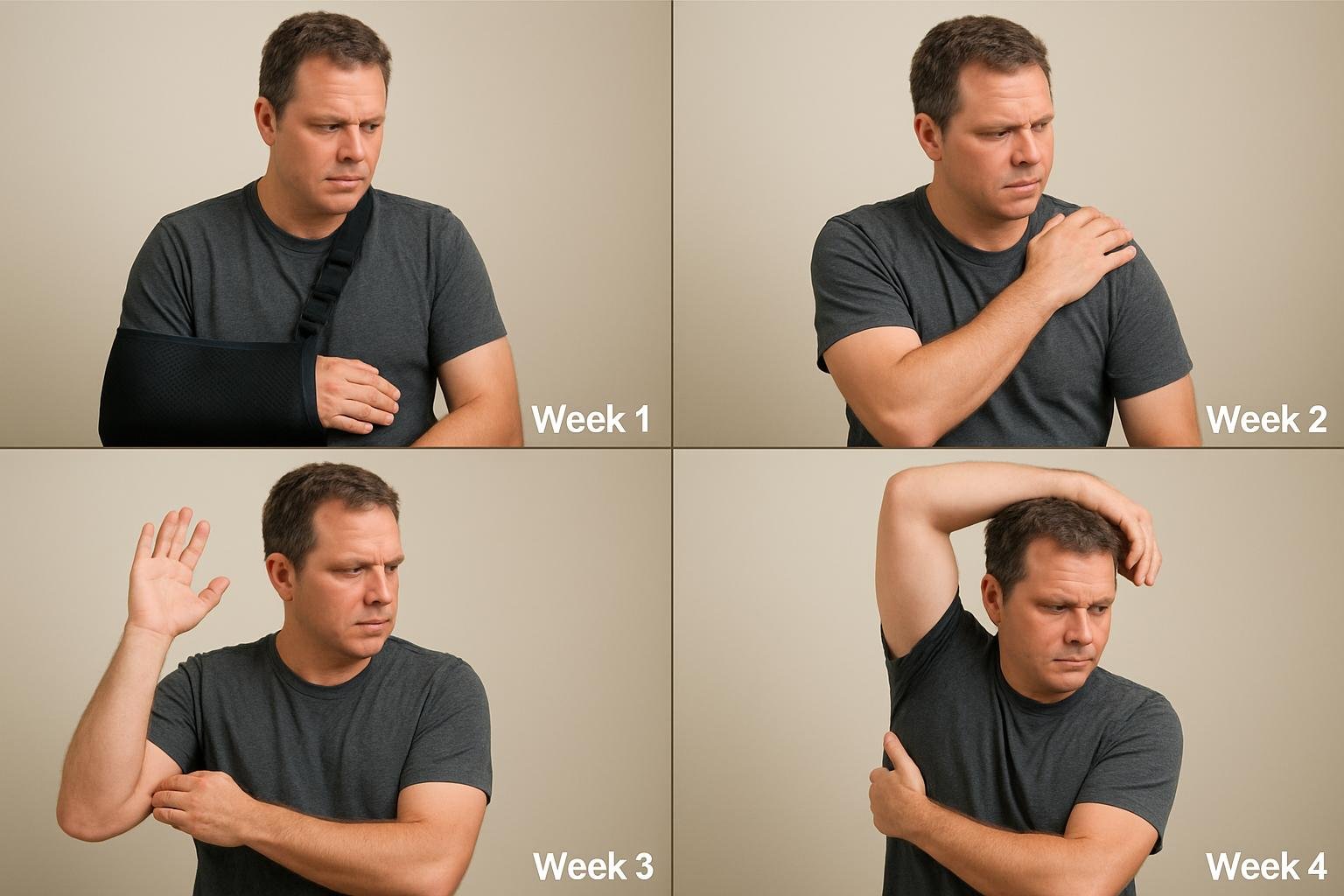
Rehab is as important as the initial reduction or surgery. A structured program progresses from protected range-of-motion exercises to strengthening and finally sport- or work-specific conditioning. The timeline varies; nonoperative treatment may take 8–12 weeks for functional recovery, while post-operative rehab can extend for several months.
Physical therapists focus on rotator cuff endurance, scapular control, and gradual return-to-activity planning. Patience and adherence to the program reduce the risk of re-injury. Quick return to intense activities without adequate rehab is a common mistake that leads to recurrence.
Sample rehab phases
Phases often include: protected motion to prevent stiffness, targeted strengthening to rebuild dynamic stability, and advanced training to restore power and proprioception. Each phase has objective milestones—pain control, range-of-motion targets, and strength benchmarks—used to safely progress therapy.
Individual factors such as age, job demands, and athletic goals shape the pace. Your clinician will tailor milestones and guide decisions about returning to contact sports or heavy lifting.
Prevention strategies and lifestyle adjustments
While not all dislocations are preventable, many can be averted with conditioning and technique adjustments. Strengthening the rotator cuff and the muscles that control the shoulder blade improves dynamic stability and helps keep the humeral head centered in the socket during athletic activities.
Proper warm-up, progressive training loads, and attention to throwing or lifting mechanics reduce risk in athletes. For people with prior instability, using protective braces or taping during high-risk activities can provide added support, though evidence is mixed and depends on individual needs.
How to choose the best doctor for shoulder dislocation
When you need expert care for a dislocated shoulder, selecting the right clinician matters. Look for an orthopaedic surgeon or sports medicine physician with specific experience in shoulder instability and a track record of treating similar injuries. Board certification, fellowship training in sports medicine or shoulder surgery, and a volume of shoulder cases are practical markers of expertise.
Asking for recommendations from primary care providers, sports trainers, or local hospitals can point you to qualified specialists. Reading patient outcomes data, reviews, and clinic reports helps, but a consultation that includes a clear explanation of risks, expected recovery, and follow-up care will tell you most about whether a physician is a good fit.
Questions to ask potential specialists
Before committing to surgery or a long treatment plan, ask about the surgeon’s experience with your specific injury type, expected outcomes, complication rates, and the rehab protocol they follow. Inquire about nonoperative alternatives and how they individualize care for athletes versus non-athletes.
Also discuss logistics: who will manage your postoperative rehab, how quickly you can be seen after injury, and how they coordinate with physical therapists. These practical details strongly influence recovery quality.
Real-life example: a return from instability
A friend of mine, a high school baseball pitcher, dislocated his shoulder diving for a catch. The immediate pain and inability to throw were frightening, but prompt reduction at an ER and early referral to a sports medicine surgeon made a big difference. Imaging showed a labral tear and some bone loss that explained his instability.
He decided on arthroscopic stabilization and committed to a disciplined rehab program. It was twelve months of steady work—daily exercises, guided PT sessions, and gradual throwing progression—before he regained competitive velocity. The takeaway was simple: early expert care and patience in rehab were decisive in restoring his career.
Common questions patients ask
Patients often wonder whether a dislocation permanently damages the shoulder or how long until they can return to sport. While outcomes vary, many people regain full function with appropriate treatment and rehabilitation. Age, the nature of the injury, and how quickly you seek care influence prognosis.
Another frequent question is whether a sling should be used and for how long. Immobilization is common for the first few weeks but prolonged slings can cause stiffness. Your physician will balance protection against the risk of frozen shoulder and outline a clear plan for progressive motion.
Quick reference table: signs, urgency, and recommended action
| Sign | Urgency | Recommended action |
|---|---|---|
| Visible deformity, arm out of position | High | Emergency evaluation; avoid self-reduction; immobilize and transport |
| Severe pain with loss of motion | High | Seek urgent care; imaging and reduction likely |
| Numbness/tingling or weak hand | High | Emergency assessment for nerve/vascular injury |
| Pop or instability without severe pain | Moderate | Orthopedic evaluation within days; consider imaging |
| Mild soreness after injury without deformity | Low to moderate | Monitor; consult primary care or PT if persistent |
When to go to the emergency room versus a clinic visit
Go to the emergency department if your shoulder shows an obvious deformity, if you have severe pain that prevents any movement, or if you have numbness, tingling, or loss of pulse in the arm or hand. The ER can provide immediate reduction, sedation, and urgent imaging to protect nerves and vessels.
If symptoms are less dramatic—some pain, occasional instability, or reduced motion without neurovascular signs—a timely visit with an orthopaedic clinic or urgent care is appropriate. Many sports medicine clinics offer rapid appointments and can coordinate imaging and follow-up care quickly.
Medications and pain control
Short-term pain control is important to allow early rehab and prevent painful guarding that leads to stiffness. Over-the-counter options like acetaminophen and NSAIDs are commonly used. For severe pain, providers may prescribe short courses of stronger analgesics or perform a nerve block during reduction to make the procedure manageable.
Long-term reliance on opioid painkillers is discouraged; non-opioid strategies, including anti-inflammatory medications, ice, and targeted physical therapy, are safer and support recovery. Discuss contraindications and gastrointestinal or cardiovascular risks with your clinician before starting NSAIDs regularly.
How long does it take to get back to normal?
Recovery timelines vary. With nonoperative care, many people return to daily activities within 6 to 12 weeks, but full return to contact sports may take longer and depends on stability and strength. After surgery, expect a structured rehab program and a slower timeline—often 4 to 6 months before light sport-specific activity and up to a year for full competitive return in high-demand athletes.
Realistic expectations and adherence to rehab are the best predictors of success. Rushing back too soon increases the chance of another dislocation and potential longer-term damage.
Finding and working with the Best doctor for shoulder dislocation
Finding the Best doctor for shoulder dislocation means choosing someone who combines technical expertise with clear communication. An excellent specialist explains your condition, outlines realistic options, and involves you in decisions about surgery and rehab. They’ll also coordinate care with skilled physical therapists and, if needed, pain management or vascular teams.
Seek a clinician who is up-to-date with modern arthroscopic techniques, has experience treating athletes if that’s your goal, and who offers structured postoperative rehabilitation. A second opinion is reasonable for anyone facing surgery—good specialists welcome informed questions and will explain why they recommend a particular approach.
Tips for preventing recurrence after you recover
After recovery, maintain a regular routine of rotator cuff and scapular exercises to protect against future episodes. Cross-training, avoiding sudden increases in training intensity, and using proper mechanics in overhead sports reduce stress on the shoulder. If you’ve had multiple dislocations, consider a tailored sport-specific maintenance program supervised by a physical therapist.
Be realistic about high-risk activities; if your job or sport repeatedly exposes you to shoulder trauma, discuss protective strategies with your care team. Sometimes minor technique changes or periodic strength checks prevent a major setback.
Final practical checklist
- If the shoulder looks deformed, avoid moving it and seek emergency care.
- For pain and limited motion without neurovascular signs, get an urgent clinic evaluation within 24–48 hours.
- Ask for X-rays at minimum; request MRI or CT if soft-tissue or bone injury is suspected.
- Follow a prescribed rehab plan and don’t rush return to sport—use objective milestones to progress.
- Choose a specialist who treats shoulder instability regularly and can coordinate your post-injury care.
Shoulder dislocations are unsettling, but rapid recognition and appropriate care change the story for the better. Knowing the early warning signs and how to respond protects your shoulder function and reduces the risk of repeat injury. If you ever face this situation, act quickly, seek experienced care, and commit to the rehabilitation that will restore strength and confidence in your shoulder.